
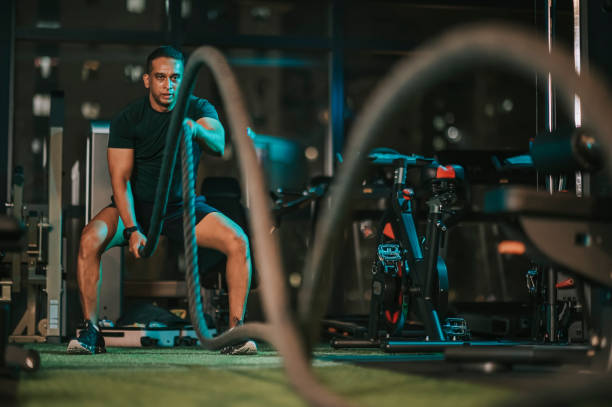
By Mark Chen — Used to think workouts needed to be an hour. Now does 20 minutes. Got better results.
Last updated: May 2026
You think you need an hour at the gym to get in shape. You do not have an hour. So you do nothing.
There is another way. It is called High-Intensity Interval Training. HIIT for short.
HIIT workouts are short. Usually 15-25 minutes. They are hard. But they work.
What Is HIIT?
HIIT alternates between short bursts of all-out effort and periods of rest or low-intensity recovery.
| Interval | Duration | Effort Level |
|---|---|---|
| Work | 20-60 seconds | Maximum (9 out of 10) |
| Rest | 10-60 seconds | Very light (2-3 out of 10) |
| Repeat | 4-10 times | |
| Total workout | 15-25 minutes |
You push hard. Then you rest. Then you push hard again. By the end, you are exhausted. But you are done.
HIIT vs. Traditional Cardio
| Traditional Cardio (LISS) | HIIT | |
|---|---|---|
| Duration | 30-60 minutes | 15-25 minutes |
| Intensity | Moderate (conversation possible) | Maximum (no conversation) |
| Effort level | 5-6 out of 10 | 8-9 out of 10 |
| Calories during | Moderate | High |
| Calories after (afterburn) | Low | High |
| Equipment needed | Treadmill, bike, elliptical | Bodyweight, or minimal equipment |
LISS stands for Low-Intensity Steady State. Jogging, cycling at a steady pace, swimming laps. It is effective. It just takes longer.
HIIT compresses the same benefits into less time.
The Afterburn Effect
This is the secret sauce.
After HIIT, your body continues burning calories for hours. Your metabolism stays elevated. Your body needs extra energy to repair muscles, replenish oxygen, and cool down.
This is called EPOC (Excess Post-Exercise Oxygen Consumption). HIIT creates a larger EPOC than steady-state cardio. You burn calories while sitting on your couch after the workout.
| Workout | Calories burned during | Calories burned after (4 hours) | Total |
|---|---|---|---|
| 30 min jogging | 300 | 30 | 330 |
| 20 min HIIT | 250 | 150 | 400 |
HIIT burns more total calories in less time.
Benefits of HIIT
Saves time.
You can get a great workout in 15-20 minutes. No hour-long gym sessions. No long runs.
Improves cardiovascular fitness.
HIIT improves VO2 max (your body’s ability to use oxygen) faster than steady-state cardio.
Preserves muscle.
Long cardio can burn muscle. HIIT preserves muscle while burning fat.
Lowers blood sugar.
HIIT improves insulin sensitivity. It helps your body process sugar more effectively.
No equipment needed.
You can do HIIT with bodyweight exercises. Burpees, jumping jacks, squat jumps, mountain climbers.
Sample HIIT Workouts
Beginner (15 minutes)
| Interval | Exercise | Duration |
|---|---|---|
| Warm-up | Light jog in place | 3 minutes |
| Work | High knees | 20 seconds |
| Rest | Walk | 40 seconds |
| Work | Butt kicks | 20 seconds |
| Rest | Walk | 40 seconds |
| Work | Jumping jacks | 20 seconds |
| Rest | Walk | 40 seconds |
| Repeat work/rest cycle 3 more times | ||
| Cool-down | Light walk, stretch | 3 minutes |
Intermediate (20 minutes)
| Interval | Exercise | Duration |
|---|---|---|
| Warm-up | Light jog, arm circles | 3 minutes |
| Work | Burpees | 30 seconds |
| Rest | Walk | 30 seconds |
| Work | Mountain climbers | 30 seconds |
| Rest | Walk | 30 seconds |
| Work | Squat jumps | 30 seconds |
| Rest | Walk | 30 seconds |
| Work | High knees | 30 seconds |
| Rest | Walk | 30 seconds |
| Repeat cycle 3 more times | ||
| Cool-down | Stretching | 3 minutes |
Advanced (25 minutes)
| Interval | Exercise | Duration |
|---|---|---|
| Warm-up | Dynamic stretches | 5 minutes |
| Work | Sprints (outside or treadmill) | 45 seconds |
| Rest | Walk | 15 seconds |
| Work | Burpees | 45 seconds |
| Rest | Walk | 15 seconds |
| Work | Box jumps (or squat jumps) | 45 seconds |
| Rest | Walk | 15 seconds |
| Work | Mountain climbers | 45 seconds |
| Rest | Walk | 15 seconds |
| Repeat cycle 4 times | ||
| Cool-down | Deep stretching | 5 minutes |
Common Mistakes
Going too hard too soon.
HIIT is intense. Start with longer rest periods. Work up to shorter rest.
Not warming up.
Cold muscles + all-out effort = injury risk. Warm up for 3-5 minutes.
Doing HIIT every day.
HIIT stresses your body. You need recovery. 2-3 HIIT sessions per week is enough. Do steady-state cardio or rest on other days.
Poor form.
When you are tired, form breaks down. Bad form leads to injury. Prioritize form over speed.
Who Should Not Do HIIT
| Condition | Recommendation |
|---|---|
| Beginners with no exercise history | Start with walking or steady-state cardio. Build a base. |
| Joint problems | High-impact HIIT (jumping) may aggravate joints. Try low-impact HIIT (cycling, swimming). |
| Heart conditions | Consult a doctor before starting HIIT. |
| Injury recovery | Stick with physical therapy and low-intensity work. |
HIIT is effective. It is not for everyone. Listen to your body.
How to Start
- Pick one day this week.
- Do the beginner workout above.
- See how you feel the next day.
- If you are sore, rest. If you feel fine, do it again in 2 days.
- Work up to 2-3 HIIT sessions per week.
You do not need a gym. You do not need equipment. You need 15 minutes and the willingness to work hard.
The Bottom Line
You do not need an hour. You need intensity.
HIIT workouts are short, hard, and effective. They burn calories. They improve fitness. They save time.
Try one tomorrow. Fifteen minutes. You will be done before you know it.
About the author: Mark Chen used to think longer was better. Then he tried HIIT. He will never go back to hour-long jogs.
This article is for informational purposes. Consult a doctor before starting a new exercise routine, especially high-intensity training.